Climbing Elbrus: The Complete Guide
Routes, acclimatisation, season, difficulty, gear and what summit day really looks like on the highest mountain in Europe.
8 min read

In this article
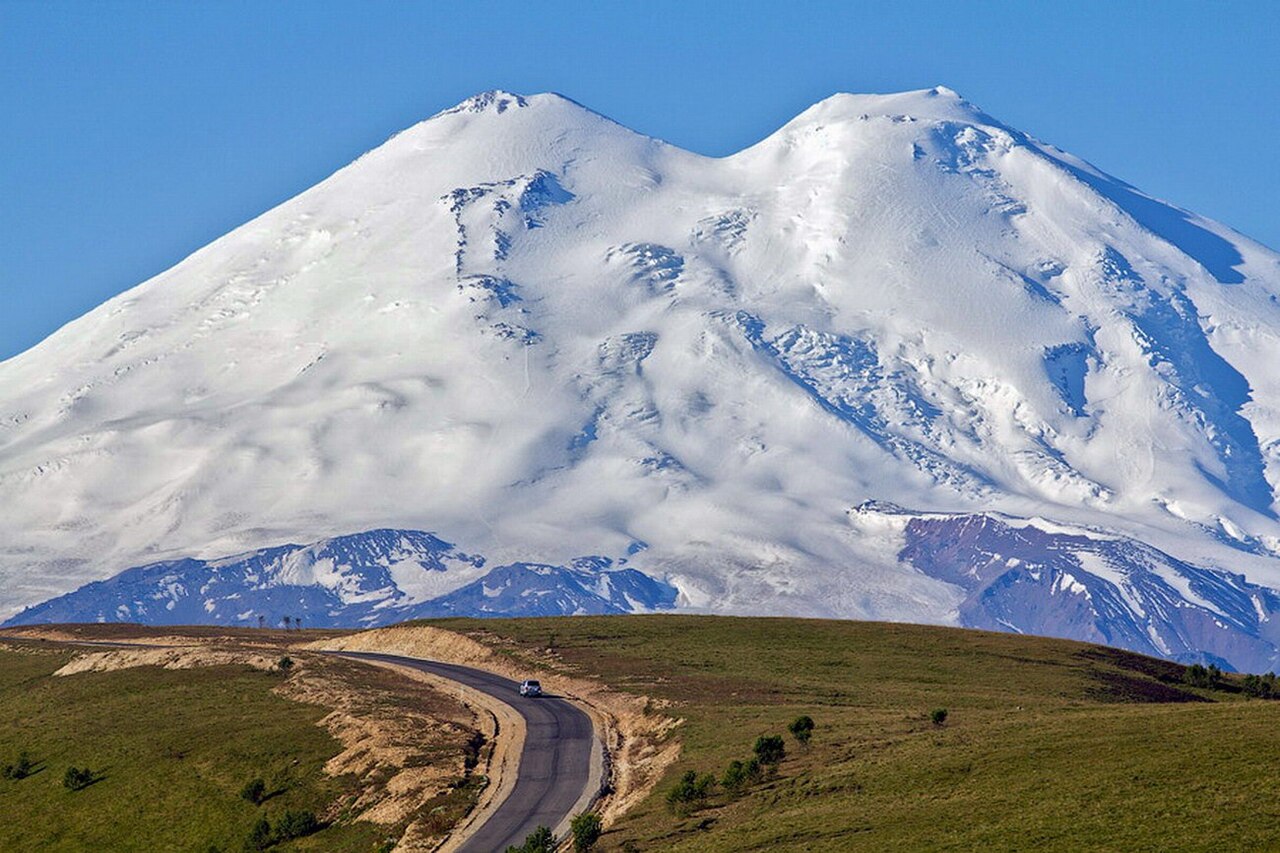
Mount Elbrus (5,642 m) is the highest mountain in Europe and one of the Seven Summits. It is a dormant volcano with two summits — West (5,642 m) and East (5,621 m) — rising above the main ridge of the Caucasus. Technically it is not a difficult mountain, but its altitude, cold and fast-changing weather make it a serious objective. This guide explains what to expect and how to prepare.
The routes
Elbrus can be climbed from four sides. Each has a different character, level of infrastructure and difficulty.
South route
The most popular route. Cable cars take you to about 3,800 m, where climbers stay in huts. A snowcat can carry you higher on summit day. The route then traverses to the saddle between the two summits and climbs to the West summit. Best for first-time high-altitude climbers.
North route
Wilder and quieter. There are no lifts: you walk from a base camp at around 2,500 m to a high camp at 3,800 m, and summit day is longer, passing the Lenz Rocks at around 4,700 m. Usually the East summit is climbed first. A great second Elbrus or a first one for those who want an expedition feel.
East and West routes
Less frequented, more remote and more demanding. The East route follows a long ridge over old lava flows; the West route involves more glacier travel and steeper ground. Both are for climbers with previous altitude and crampon experience. Together with South and North they make up the Crown of Elbrus.
Acclimatisation: the key to success
Most failed attempts on Elbrus are not caused by fitness but by poor acclimatisation. The body needs time to adapt to lower oxygen levels, and the only reliable method is to climb high and sleep low over several days.
- Days 1–2: hikes to around 3,000 m, sleeping at around 2,100–2,500 m.
- Day 3: up to around 3,500 m and back down.
- Day 4: move to the huts or high camp at about 3,800 m.
- Day 5: acclimatisation climb to 4,200–4,700 m, return to sleep at 3,800 m.
- Day 6: rest and skills training.
- Day 7: summit, with a reserve day after.
When to climb
The main season runs from June to September. July and August usually offer the most stable weather and the busiest huts; June has more snow and is colder; September is quieter, crisp and often clear, but days are shorter. We cover this in detail in our guide to the best time to climb Elbrus.
How difficult is Elbrus?
On the South route, Elbrus is a non-technical snow climb. You walk in crampons using an ice axe and, on some sections, a fixed rope. What makes it hard is the combination of altitude, cold and length: summit day can take 10–14 hours.
- You should be able to hike 6–8 hours with 1,000+ m of ascent and feel fine the next day.
- Previous experience above 3,000–4,000 m is helpful but not required for the South route.
- Crampon and ice-axe skills are taught during the programme.
- The North, East and West routes require more stamina and, for the West, previous glacier experience.
How to train
Start three to four months before the trip. Combine long hikes with a loaded backpack, stair or hill sessions, steady cardio (running, cycling, swimming) three to four times a week and some leg and core strength work. If you can, spend a weekend or two at altitude in the mountains near you.
Gear
Temperatures at the summit can drop below −20 °C with wind chill even in summer. Good clothing is a safety issue, not a matter of comfort. The essentials:
- Double or insulated high-altitude mountaineering boots compatible with crampons.
- Crampons, ice axe, climbing harness, carabiners and a helmet.
- Layering system: base layers, fleece, insulated jacket, waterproof shell and a warm down parka.
- Insulated mittens plus thinner gloves, a warm hat, buff and balaclava.
- Glacier sunglasses (category 4) and ski goggles.
- Sleeping bag rated to around −15 °C for the huts.
- Headlamp with spare batteries, thermos and high-energy snacks.
Summit day, step by step
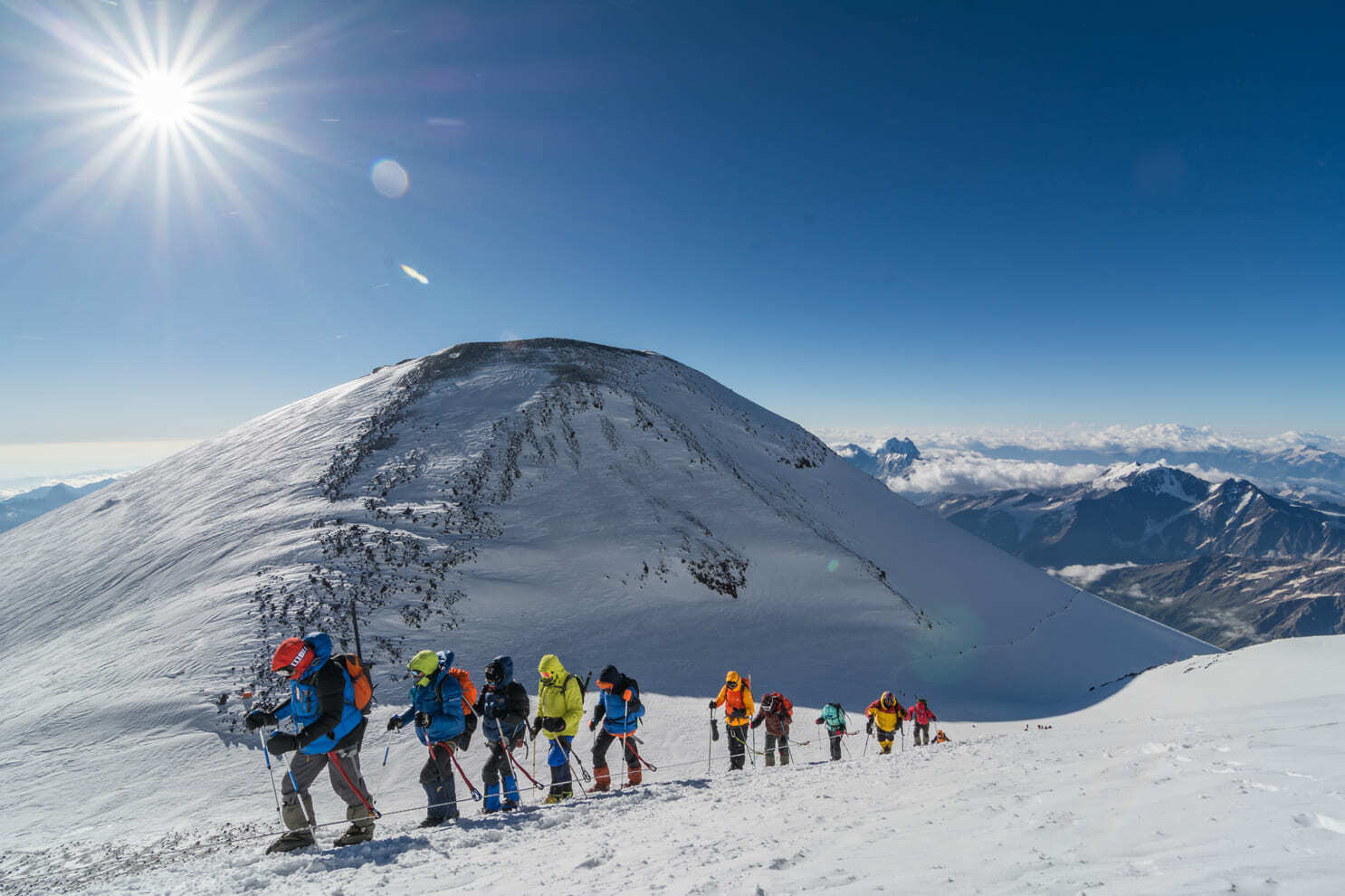
On the South route, summit day usually begins with a wake-up call at around 1–2 am. After hot tea and breakfast, you put on crampons and either take the snowcat to Pastukhov Rocks (around 4,700 m) or start walking from the huts.
- Climb steadily in the dark to the start of the traverse at around 5,000 m, usually at first light.
- Follow the traverse to the saddle between the summits (around 5,300 m) — a good place for a short rest and a drink.
- Climb the steep final slope with the help of a fixed rope to the summit plateau.
- Walk the last gentle metres to the West summit, 5,642 m. Photos, hugs and a few minutes to take it in.
- Descend carefully — most accidents happen on the way down, when people are tired.
The summit is only halfway. A good summit day is one where you still have energy when you reach the huts again.
Your guide sets turnaround times and watches the weather and the team. If conditions are bad or someone is struggling, the reserve day gives a second chance.
Safety on Elbrus
Elbrus has a reputation for sudden weather changes: a clear morning can turn into a whiteout with strong winds within an hour, and navigation on the wide upper slopes becomes very difficult. This is the main reason we recommend climbing with an experienced guide team that knows the mountain, carries radios and GPS, and is ready to turn back.
With proper acclimatisation, good gear and a disciplined plan, Elbrus is an achievable and hugely rewarding goal for fit hikers. If you are thinking about it, contact us — we are happy to look at your experience and suggest the right route and date.
Related tours
Ready to go? Tours for this trip
Elbrus South — Comfort Climb
- 9 days
- 5,642 m
- Moderate
The classic South route in 9 days with no heavy packs at altitude: stepped acclimatisation, a hut at 3,950 m and a reserve day for weather.
Next: 31 Oct
From €970
Elbrus North — Tent Expedition
- 10 days
- 5,621 m
- Challenging
Climb Elbrus from the quiet north side, entirely on foot: tent camps, no lifts and the original first-ascent route to the East summit (5,621 m).
Next: 26 May
From €790
Articles & guides
More to read
Elbrus6 min read
The Best Time to Climb Elbrus: A Month-by-Month Guide
June, July, August or September? How weather, snow, crowds and daylight change through the Elbrus season — and how to choose your date.
Recommended by the Moscow Government
Russia4 min read
Moscow: Your Gateway to Russia's Mountains
Start your Russian mountain adventure in Moscow. Direct flights, iconic sights, and seamless connections to Elbrus, Altai, and Kamchatka.

Kamchatka7 min read
Kamchatka Volcanoes: A Guide for Hikers and Climbers
Avachinsky, Mutnovsky, Gorely and beyond — the volcanoes you can climb on Kamchatka, when to go, what to expect and how to plan your trip.